
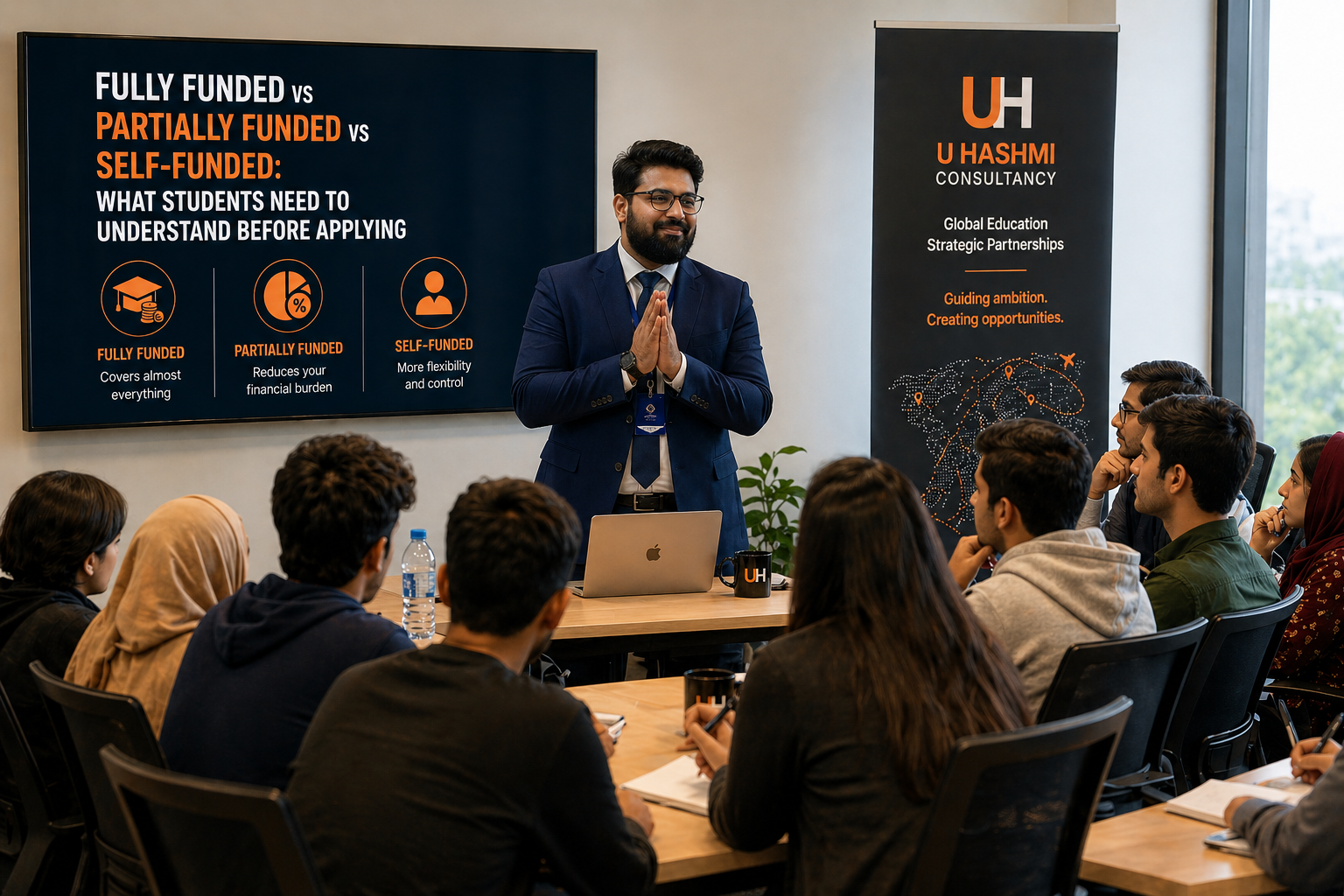
One of the biggest misconceptions students have about studying abroad is this: “If I don’t get a fully funded scholarship, I shouldn’t apply.”
That mindset quietly blocks a lot of strong opportunities.
In reality, most successful students do not rely on just one path. They understand different funding models, apply strategically, and choose options that actually make sense for their profile, timeline, and goals.
This matters because your study abroad journey is not just about getting funding. It is about building the best possible outcome with the options available to you.
Why this confusion exists
Many students:
- only hear about “fully funded scholarships”
- see success stories without context
- assume funding is all-or-nothing
- ignore realistic pathways
This leads to:
- delayed applications
- missed opportunities
- unrealistic expectations
- unnecessary frustration
A smarter approach is to understand all three pathways clearly.
1. Fully Funded Scholarships
This is what most students aim for first.
What it usually covers:
- tuition fees
- living expenses
- travel
- sometimes health insurance
What students often misunderstand:
Fully funded does not mean easy or common.
These opportunities are:
- highly competitive
- limited in number
- selective beyond just grades
- focused on fit, leadership, and direction
What strong candidates usually have:
- clear academic direction
- strong SOP and documents
- relevant experience
- consistent profile
- alignment with the scholarship’s goals
Not sure whether your profile is competitive for fully funded opportunities?
2. Partially Funded Opportunities
This is where many students miss out unnecessarily.
What it may include:
- tuition reduction
- partial scholarships
- assistantships
- merit-based discounts
Why this matters:
Partially funded options:
- are more accessible
- have wider availability
- reduce financial burden significantly
- can still lead to strong outcomes
Smart strategy:
Many strong applicants:
- combine partial funding + personal budget
- apply to multiple institutions
- choose better-fit universities instead of only famous ones
This approach is often more realistic and controllable.
3. Self-Funded Pathways
This is the least talked about, but very important.
What it means:
- student funds education independently (fully or mostly)
Why it is misunderstood:
Students often assume:
- this is a “last option”
- it is not worth considering
But in reality:
- it offers faster admission pathways
- gives more flexibility in university choice
- allows better long-term planning
- avoids extreme competition pressure
When it makes sense:
- when your profile is strong but not scholarship-ready yet
- when timing matters
- when you want a specific country/program
- when you plan to build experience abroad
The real mistake students make
The biggest mistake is not choosing one option. It is choosing only one option too early.
For example:
- only applying for fully funded → high risk
- ignoring partial options → missed opportunities
- delaying everything → lost cycles
A better strategy is:
Use a mixed approach
- Apply for fully funded (high reward)
- Apply for partially funded (balanced)
- Keep self-funded as a backup or strategic option
How to decide what fits your profile
Ask yourself:
1. How strong is my profile right now?
- strong → consider scholarships
- average → mix strategy
- developing → strengthen first
2. What is my timeline?
- urgent → wider options needed
- flexible → can aim higher
3. What is my financial flexibility?
- fully dependent on funding → narrow path
- some flexibility → more options
4. What is my priority?
- funding only?
- best university fit?
- long-term career?
Your answers will guide your strategy.
What strong students do differently
Students who succeed usually:
- do not rely on one outcome
- apply across multiple funding types
- understand their profile honestly
- strengthen documents early
- choose realistic universities
- plan 6–12 months ahead
That is exactly the kind of strategy-led approach your consultancy is built around—helping students find best-fit options, stronger applications, and realistic pathways, not just chasing one outcome blindly.
Confused about which path makes the most sense for you?
Get personalised guidance and build a strategy based on your profile, goals, and timeline.
How this connects to your full application strategy
Your funding path affects:
- country selection
- university shortlist
- SOP angle
- timeline
- document strength
- visa planning
This is why funding should not be treated separately. It should be part of your overall study abroad strategy.
Final thoughts
There is no single “right” funding path. There is only the path that works best for:
- your profile
- your goals
- your timing
- your resources
The smartest students do not chase one option. They build a strategy that gives them multiple ways to succeed. Your study abroad journey should not depend on one outcome.
Check your scholarship readiness and identify the best funding strategy for your profile.