
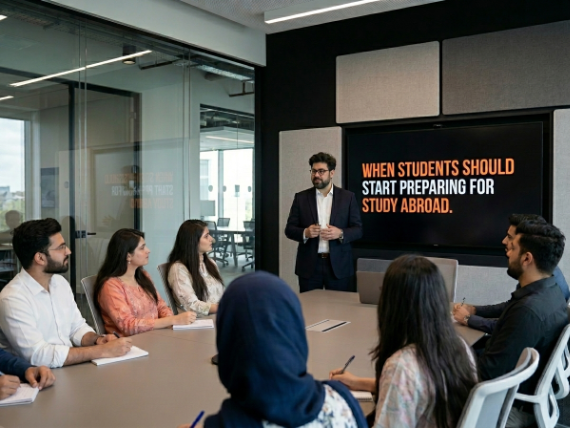
One of the most common mistakes students make is not failing an application. It’s starting too late.
A lot of students begin thinking about studying abroad:
- a few months before deadlines
- after seeing others apply
- when they feel “ready”
By then, most strong opportunities are already out of reach. The reality is simple:
Your study abroad journey is not decided in the last month. It is built 6–12 months before you apply.
Why timing matters more than students think
Your timeline affects everything:
- university options
- scholarship eligibility
- SOP quality
- document strength
- test scores
- overall competitiveness
Students who start early:
- have more options
- submit stronger applications
- apply more strategically
Students who start late:
- rush decisions
- compromise on universities
- weaken their documents
- miss scholarships
The biggest mistake students make
Students often think: “I’ll start once I decide everything.”
But it actually works the other way around: You decide everything by starting early.
Ideal Study Abroad Timeline (Simplified)
Let’s break this into a realistic structure.
12 Months Before Applications
This is where strong applications begin.
Focus areas:
- understanding your goals
- choosing field direction
- exploring countries
- evaluating your profile honestly
- identifying gaps
What you should do:
- research programs and countries
- start thinking about scholarships
- begin language test preparation (IELTS, etc.)
- understand requirements
This stage is about clarity, not pressure.
9 Months Before Applications
Now you move from thinking → planning.
Focus areas:
- country shortlisting
- university research
- profile strengthening
What you should do:
- shortlist realistic universities
- improve your CV/profile
- take or plan language tests
- identify scholarship opportunities
This stage is about positioning yourself better.
6 Months Before Applications
This is the most important phase.
Focus areas:
- documents
- strategy
- alignment
What you should do:
- start writing SOP
- refine CV
- request recommendation letters
- finalize shortlist
This stage is about building a strong application.
Not sure whether you’re on the right timeline? Get Personalised Guidance
3 Months Before Applications
Execution phase.
Focus areas:
- submission
- refinement
- accuracy
What you should do:
- finalize SOP
- submit applications
- double-check documents
- track deadlines
This stage is about precision and completion.
After Submission
Students often ignore this phase.
Focus areas:
- interview prep
- scholarship follow-ups
- backup planning
What you should do:
- prepare for interviews (if needed)
- track application updates
- keep alternative options ready
Realistic Timeline Scenarios
Let’s be honest — not everyone starts early.
Scenario 1: Started 12 months early
Best position:
- strong applications
- scholarship chances
- multiple options
Scenario 2: Started 6 months early
Still manageable:
- decent applications
- limited but workable options
Scenario 3: Started 2–3 months early
Risky:
- rushed documents
- fewer universities
- weaker positioning
Scenario 4: Started too late
You may need to:
- delay intake
- apply strategically
- focus on improving profile
What strong students do differently
Students who succeed:
- start before they feel ready
- ask better questions early
- build their profile intentionally
- treat applications as a process, not a last-minute task
This aligns directly with your consultancy’s positioning—helping students find realistic pathways, stronger applications, and better positioning, not rushed decisions
How this connects to your full journey
Your timeline affects:
- country choice
- scholarship chances
- SOP quality
- university shortlist
- funding strategy
That’s why timeline is not separate. It is the foundation of your entire strategy.
Not sure where you stand in your timeline or what you should do next? Get personalised guidance and build a clear, realistic plan based on your profile, goals, and deadlines.
Final thoughts
There is no “perfect” time to start. But there is definitely a too late.
The earlier you start:
- the better your options
- the stronger your application
- the more control you have
And in most cases, starting early is not about working harder. It’s about working smarter and more strategically.
Your study abroad journey should not be rushed. Get personalized guidance and build a timeline that actually works for your goals.